HB 5356 · MI SENATE
Michigan vehicle code: amend sections 14, 41a, 78, 217, 217c, 233, 233a, 233b, 234, 235, 238, 239, 240, 248, 248a, 248f, 248j, 249, 250, 258, 801b, 806, and 810a
Motion: Third reading and passage
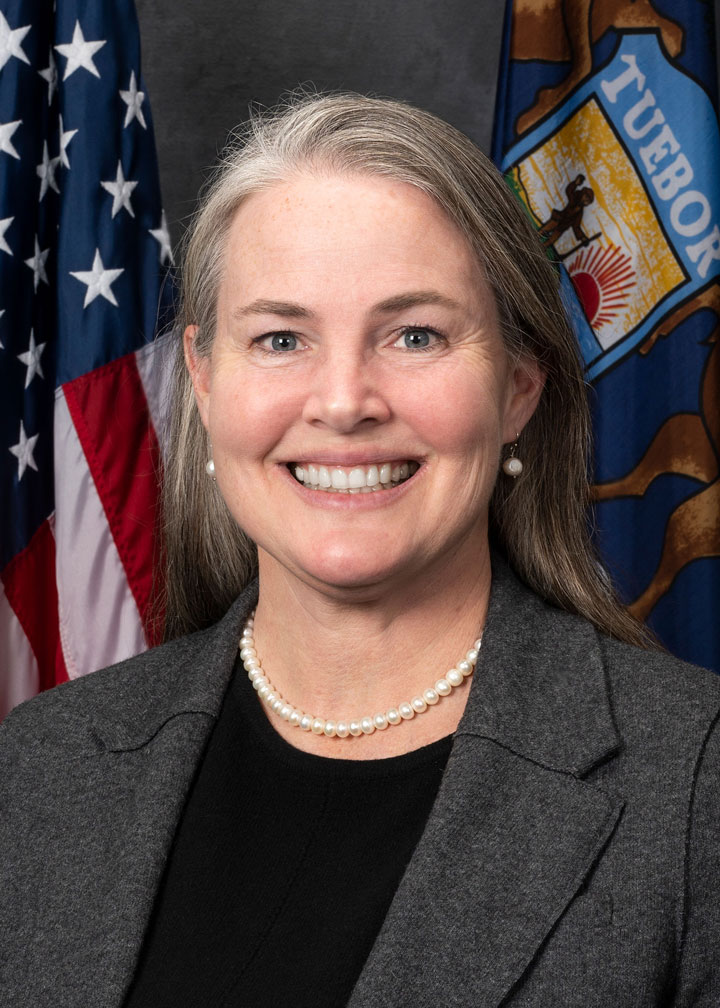 Photo: senatedems.com
MI · Officeholder
DState Senator · District 14
On the ballot Nov 3, 2026: Michigan Senate District 14
Sue Shink is a Democratic state senator from Michigan State Senate District 14 who has served since January 1, 2023 and is seeking re-election in the November 3, 2026 general election.[1] A lawyer and farm owner, she previously chaired the Washtenaw County Board of Commissioners.[1]
Sue Shink lives in Northfield Township, Michigan.[1] She earned a bachelor's degree in political science and government in 1989, a juris doctor in 1994 and a master's degree in resource policy and management in 1995, all from the University of Michigan.[1] Her career experience includes owning North Wind Farm LLC.[1]
Shink chaired the Washtenaw County Board of Commissioners and served on the Washtenaw County Food Policy Council and the Huron River Watershed Council.[1] In a 2022 Ballotpedia survey, she described herself as "a mom, a lawyer and a public servant" and said her work on the county board included increased funding for safety-net services, a weatherization fund and efforts to address climate change.[2]
In the Senate, Shink's 2025 and 2026 assignments include chairing the Natural Resources and Agriculture Committee and serving as majority vice chair of the Civil Rights, Judiciary, and Public Safety Committee.[1] She also sits on the Appropriations, Energy and Environment, Housing and Human Services, and Local Government committees.[1]
Researched from the cited sources on 2026-10-21. Not yet independently fact-checked.
Sue Shink is on the Nov 3, 2026 ballot for Michigan Senate District 14 as D. Not researched in depth — candidate list only.
Their recorded votes on bills that divided the chamber (unanimous votes left out), grouped by topic. A bill can sit under more than one topic. "With" and "against" compare each vote with how most Democrats voted. How topics are assigned
Most contested
Makes supplemental 2025-26 appropriations totaling about $1.0 billion gross across state departments, including $596.7 million for health and human services and two budget stabilization fund appropriations totaling $350 million, with a net $52.6 million general fund reduction.
Apr 30, 2026 · Passed 19–18 · with most DemocratsOfficial record ↗
Appropriates about $63.0 billion in total, including $12.7 billion from the general fund, to state departments, the judicial branch and the legislative branch for fiscal year 2026-27 (Senate version).
Apr 29, 2026 · Passed 19–18 · with most DemocratsOfficial record ↗
Makes minimum staffing levels a required subject of collective bargaining for police and fire units covered by Public Act 312, but optional if the employer's revenue-sharing sales tax receipts or property tax collections fell from the prior fiscal year.
Jun 26, 2025 · Passed 19–18 · with most DemocratsOfficial record ↗
Most contested
Appropriates about $1.02 billion in total funds for the Department of State Police for fiscal year 2025-26.
May 13, 2025 · Passed 19–18 · with most DemocratsOfficial record ↗
Appropriates about $395.3 million in total funds for the judiciary for fiscal year 2025-26.
May 13, 2025 · Passed 19–18 · with most DemocratsOfficial record ↗
Revised judicature act of 1961: add section 2950p.
As introduced, lets people age 60 or older, vulnerable adults and people with developmental disabilities petition a circuit court for a protection order that can bar firearm purchase or possession, stalking conduct, harm to their animals, and control over their money or property.
Apr 16, 2025 · Passed 19–18 · with most DemocratsOfficial record ↗
Most contested
Appropriates about $39.3 billion in total funds for the Department of Health and Human Services for fiscal year 2025-26.
May 13, 2025 · Passed 19–18 · with most DemocratsOfficial record ↗
The code of criminal procedure: amend section 13n of chapter XVII
Adds the felony penalties created by a companion bill on interfering with access to health facilities to the state sentencing guidelines; it takes effect only with that bill.
Jun 25, 2025 · Passed 19–17 · with most DemocratsOfficial record ↗
Bars injuring, intimidating or interfering with, by force, threat of force or physical obstruction, people obtaining or providing reproductive health services, and damaging property of facilities that provide them; sets misdemeanor and felony penalties and allows civil suits.
Jun 25, 2025 · Passed 19–17 · with most DemocratsOfficial record ↗
Most contested
Sets 2026-27 K-12 school aid, raising the per-pupil foundation allowance 2.5% to $10,300 and merging at-risk and bilingual funding into a new weighted allowance that phases up over 15 years (Senate version).
Apr 30, 2026 · Passed 19–18 · with most DemocratsOfficial record ↗
Appropriates about $756.2 million in total funds for the Department of Lifelong Education, Advancement, and Potential for fiscal year 2025-26.
May 13, 2025 · Passed 19–18 · with most DemocratsOfficial record ↗
Appropriates about $166.4 million in total funds for the Department of Education for fiscal year 2025-26.
May 13, 2025 · Passed 19–18 · with most DemocratsOfficial record ↗
Most contested
Appropriates about $159.5 million in total funds for the Department of Agriculture and Rural Development for fiscal year 2025-26.
May 13, 2025 · Passed 19–18 · with most DemocratsOfficial record ↗
Appropriates about $1.03 billion in total funds for the Department of Environment, Great Lakes, and Energy for fiscal year 2025-26.
May 13, 2025 · Passed 19–18 · with most DemocratsOfficial record ↗
Removes expiration dates on many environmental permit, registration and certification fees under the Natural Resources and Environmental Protection Act, and requires annual inflation adjustment of the fees beginning January 1, 2026.
Sep 25, 2025 · Passed 19–17 · with most DemocratsOfficial record ↗
Most contested
The insurance code of 1956: amend sections 476a and 476b
Lets out-of-state insurers subtract the new housing opportunity tax credit they claim from the burden counted in Michigan's insurer retaliatory tax calculation, starting in 2027.
Jul 3, 2026 · Passed 21–15 · with most DemocratsOfficial record ↗
Income tax act of 1967: add sections 281 and 678.
Allows a qualified taxpayer to claim the nonrefundable Housing Opportunity Tax Credit, as allocated on an eligibility certificate, against individual or corporate income tax starting January 1, 2027, under the MSHDA program created in HB 5805.
Jul 3, 2026 · Passed 21–15 · with most DemocratsOfficial record ↗
State housing development authority act of 1966: amend section 22
Lets the Michigan State Housing Development Authority run a housing opportunity tax credit program for low-income housing projects, capped at $42 million a year from 2027 and adjusted for inflation; each credit is the lesser of the federal credit or one-sixth of the reserved amount.
Jul 3, 2026 · Passed 22–14 · with most DemocratsOfficial record ↗
Most contested
Appropriates about $6.91 billion in total funds for the state transportation department for fiscal year 2025-26.
May 13, 2025 · Passed 19–18 · with most DemocratsOfficial record ↗
Requires the Department of Transportation to estimate the cost of local federal bridge load analysis, inspection and other mandates, and lets it pay them from the Movable Bridge Fund when no other funding exists.
Sep 25, 2025 · Passed 19–17 · with most DemocratsOfficial record ↗
Aeronautics code of the state of Michigan: amend section 77
Makes nonsubstantive wording changes to section 77 of the Aeronautics Code.
Sep 25, 2025 · Passed 19–16 · with most DemocratsOfficial record ↗
Most contested
Appropriates about $291.6 million in total funds for the Department of Military and Veterans Affairs for fiscal year 2025-26.
May 13, 2025 · Passed 19–18 · with most DemocratsOfficial record ↗
Michigan national guard tuition assistance act: amend sections 3 and 4
Sep 25, 2025 · Passed 26–10 · with most DemocratsOfficial record ↗
Most contested
Identity theft protection act: amend sections 3, 12, and 12b
Requires businesses and state agencies holding residents' personal information to keep security safeguards, notify affected residents of data breaches, and notify the attorney general of breaches affecting more than 100 residents, with civil fines up to $750,000.
Aug 26, 2025 · Passed 19–15 · with most DemocratsOfficial record ↗
Enacts the LEAD Act, barring chatbot operators from offering minors chatbots that act as confidants or encourage harm, requiring age verification, and allowing Attorney General fines up to $25,000 per violation and parent lawsuits.
Apr 29, 2026 · Passed 20–17 · with most DemocratsOfficial record ↗
Michigan consumer protection act: amend section 3
Makes a violation of the Kids Code Act in Senate Bill 758 an unlawful practice under the Michigan Consumer Protection Act.
Apr 29, 2026 · Passed 20–17 · with most DemocratsOfficial record ↗
Voted against most of their party on 5 of 272 party-divided votes on file.
Most often on: Jobs & cost of living (5), Transportation (1)
Commercial rehabilitation act: amend sections 2, 6, 7, 14, and 16
What it does: Extends the commercial rehabilitation tax exemption certificate sunset to December 31, 2035, lengthens the maximum certificate term from 10 to 12 years, and lets applicants submit amended applications to correct errors.
Voted no · most Democrats voted yes · Democrats 17–2, Republicans 5–11
Dec 9, 2025Official record ↗
Commercial redevelopment act: amend sections 9, 12a, 16, and 18
What it does: Extends from December 31, 2025 to December 31, 2035 the date after which new commercial facilities exemption certificates may be issued, and lets applicants amend applications to correct errors.
Voted no · most Democrats voted yes · Democrats 17–2, Republicans 5–11
Dec 9, 2025Official record ↗
Motor fuel tax act: amend section 8
What it does: On the version voted Mar 19, 2025: Sets Michigan's gasoline and diesel tax at 51 cents per gallon starting October 1, 2025, up from a 26.3-cent base rate adjusted annually for inflation, and changes how the January 1,…
Voted no · most Democrats voted yes · Democrats 16–3, Republicans 8–9
Oct 3, 2025Official record ↗
Provide for the imposition and collection of excise taxes on certain sales of marihuana; to provide for the establishment of procedures for the collection, administration, and enforcement of those…
What it does: Imposes a 24% excise tax, starting January 1, 2026, on the wholesale price of marijuana sold or transferred to retail licensees; revenue goes mostly to the neighborhood road fund; takes effect only if HB 4183, 4961, a…
Voted no · most Democrats voted yes · Democrats 15–4, Republicans 4–13
Oct 3, 2025Official record ↗
Improved workforce opportunity wage act: amend sections 4, 4d, and 10
What it does: Sets Michigan's minimum wage at $12.48 on February 21, 2025, $13.73 in 2026 and $15.00 in 2027, with later inflation increases, and keeps a separate tipped wage rising from 38% to 50% of the minimum by 2031, replacing…
Voted yes · most Democrats voted no · Democrats 8–10, Republicans 12–2
Feb 13, 2025Official record ↗
The votes in their chamber that came out closest and most divided by party, among those they voted on. How we rank
With most of their party · Passed 19–18 · Yes 19–No 18 · Democrats 19–0, Republicans 0–18
Apr 30, 2026Official record ↗
With most of their party · Passed 19–18 · Yes 19–No 18 · Democrats 19–0, Republicans 0–18
Apr 30, 2026Official record ↗
With most of their party · Passed 19–18 · Yes 19–No 18 · Democrats 19–0, Republicans 0–18
Apr 29, 2026Official record ↗
With most of their party · Passed 19–18 · Yes 19–No 18 · Democrats 19–0, Republicans 0–18
Jun 26, 2025Official record ↗
With most of their party · Passed 19–18 · Yes 19–No 18 · Democrats 19–0, Republicans 0–18
Jun 10, 2025Official record ↗
Michigan consumer protection act: amend the title and sections 2, 4, 5, 10, and 15
With most of their party · Passed 19–18 · Yes 19–No 18 · Democrats 19–0, Republicans 0–18
Jun 10, 2025Official record ↗
With most of their party · Passed 19–18 · Yes 19–No 18 · Democrats 19–0, Republicans 0–18
May 13, 2025Official record ↗
With most of their party · Passed 19–18 · Yes 19–No 18 · Democrats 19–0, Republicans 0–18
May 13, 2025Official record ↗
Substantive votes concern legislation or nominations; procedural votes concern how the chamber considers them. A Yes vote applies to the motion shown, which may not be final passage.
Motion: Third reading and passage
Motion: Concur in substitute made by the House
On the version voted Jul 2, 2026: Revises the dam safety law: extends state oversight to federally licensed dams, changes spillway capacity criteria and increases inspection frequency for high- and significant-hazard dams, creates 10-year dam registrations, and allows emergency orders to remove dams in imminent danger of failure.
Motion: Third reading and passage
Motion: Third reading and passage
Motion: Third reading and passage
Motion: Third reading and passage
Motion: Third reading and passage
Motion: Third reading and passage
Excludes the property tax levied by county history museum authorities from tax increment revenues that tax increment financing authorities may capture.
Motion: Third reading and passage
Excludes the property tax levied by county history museum authorities from tax increment revenues that brownfield redevelopment authorities may capture.
Motion: Third reading and passage
Creates the History Museum Authorities Act, letting any county form an authority that, with voter approval, may levy up to 0.2 mill for up to 10 years to fund a history museum owned by a city of over 500,000 people.
Showing 10 of 434 votes in this collection. Coverage may be incomplete; each entry links to the official record.