AB 1 · WI ASSEMBLY
Relating to: changes to the educational assessment program and the school and school district accountability report.
Motion: PASSAGE
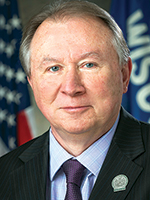 Photo: docs.legis.wisconsin.gov
WI · Officeholder
DAssembly Member · District 94
On the ballot Nov 3, 2026: Wisconsin Assembly District 94
Steve Doyle is a Democratic member of the Wisconsin State Assembly who has represented District 94 since May 2011 and is seeking re-election in the November 3, 2026, general election.[1][2] An attorney and former University of Wisconsin-La Crosse professor, he served on the La Crosse County Board for 25 years.[1]
Before his election to the Assembly, Steve Doyle was an attorney in private practice and a professor of political science at the University of Wisconsin-La Crosse.[1] He served on the La Crosse County Board for 25 years.[1]
Doyle assumed office in the Assembly on May 17, 2011.[1] In the 2025-2026 session he serves on the Commerce, Criminal Justice and Public Safety, Financial Institutions, and Insurance committees.[1]
Researched from the cited sources on 2026-10-21. Not yet independently fact-checked.
Steve Doyle is on the Nov 3, 2026 ballot for Wisconsin Assembly District 94 as D. Not researched in depth — candidate list only.
Their recorded votes on bills that divided the chamber (unanimous votes left out), grouped by topic. A bill can sit under more than one topic. "With" and "against" compare each vote with how most Democrats voted. How topics are assigned
Most contested
Relating to: requiring state employees to perform their work at the offices of their employer.
On the version voted Oct 14, 2025: Requires state agencies to have employees work in person at agency offices for at least 80 percent of scheduled hours each month, exempting duties performed off site before March 2020 and the State of Wisconsin Investment Board.
Sep 11, 2025 · Passed 51–44 · with most DemocratsOfficial record ↗
Relating to: requirements for proposed administrative rules that impose any costs.
Lowers the threshold at which an agency must halt a proposed rule from $10 million in expected two-year compliance costs to any amount, unless it removes the costs, offsets them with another rule that year, or a bill allows the rule.
Feb 12, 2026 · Passed 53–45 · with most DemocratsOfficial record ↗
Relating to: the expiration of administrative rules.
Makes each administrative code chapter expire on January 1 of the seventh year after it takes effect unless the agency readopts it by notice or rule; the rules committee may extend a deadline by up to one year, with a second extension for some chapters.
Feb 12, 2026 · Passed 53–45 · with most DemocratsOfficial record ↗
Most contested
Relating to: admission to University of Wisconsin System institutions.
Requires University of Wisconsin-Madison undergraduate admission decisions, starting 2027-28, to be predominantly based on ACT, SAT or similar test performance or objective testing measures, except for applicants admitted through the guaranteed admission program.
Feb 12, 2026 · Passed 52–45 · with most DemocratsOfficial record ↗
Relating to: race-based higher education programs and requirements.
Changes higher education programs for minority students to cover disadvantaged students instead, defined by a student's demonstrated economic and social disadvantage (personal narrative, net worth statement) without regard to race or sex, and repeals minority enrollment targets for a medical school and a dental school.
Feb 12, 2026 · Passed 53–45 · with most DemocratsOfficial record ↗
Relating to: course fees at University of Wisconsin System institutions.
Bars UW System institutions from charging a fee for fully online courses unless it covers added online costs or is also charged for the in-person equivalent, and requires institutions to disclose each course's format (in-person, online or hybrid) when listing courses.
Feb 12, 2026 · Passed 53–45 · with most DemocratsOfficial record ↗
Most contested
Relating to: prohibiting funding for health services for unlawfully present individuals.
Prohibits state, local and pass-through federal funds from paying for health care for people not lawfully present in the U.S., unless federal law requires payment or federal funds would be lost.
Sep 11, 2025 · Passed 51–44 · with most DemocratsOfficial record ↗
Relating to: race-based higher education programs and requirements.
Changes higher education programs for minority students to cover disadvantaged students instead, defined by a student's demonstrated economic and social disadvantage (personal narrative, net worth statement) without regard to race or sex, and repeals minority enrollment targets for a medical school and a dental school.
Feb 12, 2026 · Passed 53–45 · with most DemocratsOfficial record ↗
Sets free speech standards at University of Wisconsin System institutions and technical colleges, banning free speech zones and most permit requirements, allows civil suits for violations, and sets due process standards in student discipline.
Feb 12, 2026 · Passed 53–45 · with most DemocratsOfficial record ↗
Most contested
Relating to: prohibiting funding for health services for unlawfully present individuals.
Prohibits state, local and pass-through federal funds from paying for health care for people not lawfully present in the U.S., unless federal law requires payment or federal funds would be lost.
Sep 11, 2025 · Passed 51–44 · with most DemocratsOfficial record ↗
Relating to: a civil cause of action for a minor injured by a gender transition procedure.
Lets a person injured by a gender transition procedure performed as a minor sue the provider before age 33. Defense: two years of documented perceived gender, two providers certifying it is the only treatment for any mental health concern, and consent of minor and parent.
Feb 12, 2026 · Passed 53–45 · with most DemocratsOfficial record ↗
Relating to: registration of out-of-state health care providers to provide telehealth services.
Lets out-of-state health care providers with active, unrestricted credentials and no recent discipline register with the Department of Safety and Professional Services to provide telehealth in Wisconsin, and requires them to carry malpractice insurance.
Jan 15, 2026 · Passed 52–44 · with most DemocratsOfficial record ↗
Most contested
Reauthorizes the Knowles-Nelson stewardship program through 2027-28 with a combined annual limit of $13.25 million, ends forestry account transfers to the capital improvement fund, and appropriates forestry account money directly for small land purchases, property development and grants.
Jan 22, 2026 · Passed 53–44 · with most DemocratsOfficial record ↗
Reauthorizes the Knowles-Nelson stewardship land conservation program through 2027-28, cutting yearly borrowing limits to $1 million for land acquisition and $9.25 million for development and local aid, and adds wildlife habitat grants.
Jan 22, 2026 · Passed 53–44 · with most DemocratsOfficial record ↗
Relating to: prohibiting rights of nature ordinances.
Bars cities, villages, towns and counties from enacting ordinances that give legal rights to natural resources to exist, be protected against pollution, or maintain a healthy ecosystem.
Feb 19, 2026 · Passed 54–41 · with most DemocratsOfficial record ↗
Most contested
Bars state agencies and other operators from contracts or technology giving foreign-adversary-linked entities access to critical infrastructure, bars telecom providers from using FCC-banned equipment (removal, annual certification, fines), and bars foreign nationals from contributing to referendum committees.
Feb 17, 2026 · Passed 54–45 · with most DemocratsOfficial record ↗
Bans medical and research facilities receiving state money from using genetic sequencers or analysis software made in China, Cuba, Iran, North Korea, Russia or Maduro-era Venezuela, and bars storing Wisconsin residents' genome data in those countries.
Jan 22, 2026 · Passed 53–44 · with most DemocratsOfficial record ↗
Raises a crime's penalty class one level when committed as an agent of a foreign government or terrorist group to intimidate or silence dissidents and others, makes unapproved enforcement of foreign laws a Class E felony (three-year minimum prison term), and requires DOJ training.
Jan 22, 2026 · Passed 53–44 · with most DemocratsOfficial record ↗
Most contested
Bars state agencies and other operators from contracts or technology giving foreign-adversary-linked entities access to critical infrastructure, bars telecom providers from using FCC-banned equipment (removal, annual certification, fines), and bars foreign nationals from contributing to referendum committees.
Feb 17, 2026 · Passed 54–45 · with most DemocratsOfficial record ↗
Bans medical and research facilities receiving state money from using genetic sequencers or analysis software made in China, Cuba, Iran, North Korea, Russia or Maduro-era Venezuela, and bars storing Wisconsin residents' genome data in those countries.
Jan 22, 2026 · Passed 53–44 · with most DemocratsOfficial record ↗
Relating to: use restrictions on state and local government electronic devices.
On the version voted Feb 18, 2026: Bars state agencies from using devices to access social media, software or generative AI controlled by foreign adversaries such as China and Russia, and requires state, legislative and court technology policies on such products, effective January 31, 2027.
Jan 22, 2026 · Passed 53–44 · with most DemocratsOfficial record ↗
Most contested
Relating to: pay for performance grant requirements.
Requires the state to withhold 10 to 50 percent of homelessness grants for nine months, paying it only if recipients meet housing, employment or reduced-return-to-homelessness goals, and requires recipients to report data.
Feb 12, 2026 · Passed 52–46 · with most DemocratsOfficial record ↗
Adds homeless shelter premises and the area within 1,000 feet of them to the places where the maximum prison term for delivering or possessing with intent to deliver certain controlled substances increases by five years.
Feb 12, 2026 · Passed 56–42 · against most DemocratsOfficial record ↗
Requires cities and villages to grant rezoning for residential development that meets plan, density and nearby-development conditions unless denial is needed to avoid overburdened public facilities or safety threats; also allows longer tax incremental district extensions for housing.
Oct 7, 2025 · Passed 55–39 · with most DemocratsOfficial record ↗
Most contested
On the version voted Jun 18, 2025: Lets motor fuel suppliers keep the 1.35 percent administrative allowance on diesel fuel tax, as for gasoline, lets retailers claim a refund of 0.5 percent of fuel tax paid for evaporation and shrinkage, and credits wholesaler distributors for the resulting tax reduction.
Feb 20, 2026 · Passed 56–37 · against most DemocratsOfficial record ↗
Relating to: alternative methods of providing pupil transportation services.
Raises the number of passengers a non-school-bus vehicle may carry for school transportation from 9 to 14 besides the driver, and the emergency-exception threshold from 10 to 15 or more.
Feb 17, 2026 · Passed 60–39 · against most DemocratsOfficial record ↗
Voted against most of their party on 33 of 199 party-divided votes on file.
Most often on: Jobs & cost of living (10), Education & families (8), Rights & public safety (8)
Relating to: changes to the educational assessment program and the school and school district accountability report.
Voted yes · most Democrats voted no · Democrats 10–32, Republicans 51–0
May 13, 2026Official record ↗
Relating to: applying the motor vehicle fuel tax supplier’s administrative allowance to diesel fuel, a motor vehicle fuel tax refund for evaporation losses, and making an appropriation.
What it does: On the version voted Jun 18, 2025: Lets motor fuel suppliers keep the 1.35 percent administrative allowance on diesel fuel tax, as for gasoline, lets retailers claim a refund of 0.5 percent of fuel tax paid for evapor…
Voted yes · most Democrats voted no · Democrats 3–37, Republicans 53–0
Feb 20, 2026Official record ↗
Relating to: adopting changes to the federal Internal Revenue Code for state tax purposes and modifying administrative rules related to such changes.
What it does: Conforms Wisconsin income and franchise tax law to the federal Internal Revenue Code as of December 31, 2025, changes charging-order rules for creditors of limited liability company members, and requires local governm…
Voted yes · most Democrats voted no · Democrats 5–35, Republicans 53–0
Feb 20, 2026Official record ↗
Relating to: requiring the Department of Health Services to seek any necessary waiver to prohibit the purchase of candy or soft drinks with FoodShare benefits.
Voted yes · most Democrats voted no · Democrats 18–22, Republicans 53–0
Feb 20, 2026Official record ↗
Relating to: social media accounts for minors and providing a penalty.
What it does: Requires social media platforms with $1 billion or more in annual revenue to estimate users' ages, obtain parental consent for minors' accounts, default minors to private settings, and bar addictive features such as i…
Voted yes · most Democrats voted no · Democrats 7–34, Republicans 53–1
Feb 20, 2026Official record ↗
The votes in their chamber that came out closest and most divided by party, among those they voted on. How we rank
With most of their party · Passed 50–44 · Yes 50–No 44 · Democrats 0–44, Republicans 50–0
Sep 11, 2025Official record ↗
Relating to: admission to University of Wisconsin System institutions.
With most of their party · Passed 52–45 · Yes 52–No 45 · Democrats 0–45, Republicans 52–0
Feb 12, 2026Official record ↗
SUSPENSION OF RULES PROMULGATED BY STATE AGENCIES
With most of their party · Passed 52–45 · Yes 52–No 45 · Democrats 0–45, Republicans 52–0
Feb 12, 2026Official record ↗
Relating to: prohibiting funding for health services for unlawfully present individuals.
With most of their party · Passed 51–44 · Yes 51–No 44 · Democrats 0–44, Republicans 51–0
Sep 11, 2025Official record ↗
Relating to: requiring state employees to perform their work at the offices of their employer.
With most of their party · Passed 51–44 · Yes 51–No 44 · Democrats 0–44, Republicans 51–0
Sep 11, 2025Official record ↗
Relating to: pay for performance grant requirements.
With most of their party · Passed 52–46 · Yes 52–No 46 · Democrats 0–45, Republicans 52–1
Feb 12, 2026Official record ↗
Relating to: race-based higher education programs and requirements.
With most of their party · Passed 53–45 · Yes 53–No 45 · Democrats 0–45, Republicans 53–0
Feb 12, 2026Official record ↗
Relating to: course fees at University of Wisconsin System institutions.
With most of their party · Passed 53–45 · Yes 53–No 45 · Democrats 0–45, Republicans 53–0
Feb 12, 2026Official record ↗
Substantive votes concern legislation or nominations; procedural votes concern how the chamber considers them. A Yes vote applies to the motion shown, which may not be final passage.
Motion: PASSAGE
Motion: SUSPEND RULES
Motion: PASSAGE
Motion: PASSAGE
Motion: CONCURRENCE AS AMENDED
On the version voted Jun 18, 2025: Lets motor fuel suppliers keep the 1.35 percent administrative allowance on diesel fuel tax, as for gasoline, lets retailers claim a refund of 0.5 percent of fuel tax paid for evaporation and shrinkage, and credits wholesaler distributors for the resulting tax reduction.
Motion: PASSAGE
Conforms Wisconsin income and franchise tax law to the federal Internal Revenue Code as of December 31, 2025, changes charging-order rules for creditors of limited liability company members, and requires local government employees who operate heavy equipment on highway improvements to hold a state license.
Motion: PASSAGE
Motion: CONCURRENCE
Motion: PASSAGE
Changes FoodShare rules to match 2025 federal law, raising the work-requirement age cutoff from 50 to 65, narrowing the child exemption to under 14, limiting eligibility to qualified immigrants, and requiring DHS to share recipient data with USDA.
Motion: PASSAGE
Showing 10 of 260 votes in this collection. Coverage may be incomplete; each entry links to the official record.