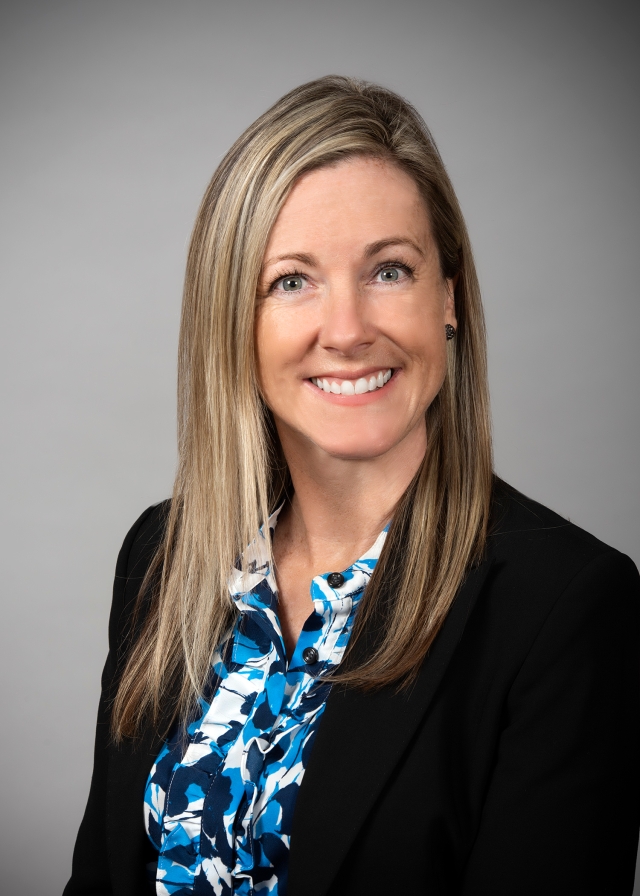
Rachel Baker is a Democratic state representative from Ohio who has represented District 27 since January 1, 2023, and is seeking re-election in the November 3, 2026 general election.[1][2]A nurse and researcher, she is the ranking member of the House Medicaid Committee.[1]
Rachel Baker lives in Anderson Township, Ohio, according to Ballotpedia.[1]She earned a bachelor's degree in nursing from the University of Cincinnati in 1996, a master's degree in social work from the University of Michigan in 1999, and a Ph.D. in nursing from the University of Cincinnati in 2003.[1]Her career experience includes working as a nurse researcher and as an adjunct instructor for graduate nursing students at several universities.[1]
Baker succeeded Tom Brinkman Jr. (R) in the Ohio House of Representatives and assumed office on January 1, 2023.[1]In the 2025-2026 session she serves on the House Finance and House Health committees and is the ranking member of the Medicaid Committee.[1]Nancy Aichholz (R) is the other candidate in the November 3, 2026 general election.[1]
Their recorded votes on bills that divided the chamber (unanimous votes left out), grouped by topic. A bill can sit under more than one topic. "With" and "against" compare each vote with how most Democrats voted. How topics are assigned
This analysis is arranged by state agency in alphabetical order. Items that do not directly involve an agency are located under the agency that has regulatory authority over the item or otherwise deals with the subject matter of the item. After the last agency (the Department of Youth Services), separate chapters address the following: 1. Election Law, addressing the replacement of the Ohio Elections Commission and other elections matters; 2. Sports facilities and unclaimed funds; 3. Boards and commissions; 4. Local government; 5. Low-income utility assistance and block grants; 6.
Overview. Repeals the Cannabis Control Law and combines regulations concerning the cultivation, processing, dispensing, use, and home grow of adult-use and medical marijuana into one chapter, referred to in this analysis as the Marijuana Control Law. Condenses the operations of the Division of Cannabis Control ( DCC) and the Division of Marijuana Control (DMC) into DCC. Product regulations. Prohibits possession or use of marijuana that is not acquired from a licensed Ohio dispensary or cultivated at the adult-use consumer ’s primary residence in accordance with the Marijuana Control Law.
Absent voting by mail. Would have required an elector to provide photo identification ( ID) to vote by mail beginning with the November 2027, general election. Would have exempted certain electors from that requirement and provided alternative ID procedures for them. Would have allowed an elector to fulfill the photo ID requirement by providing it either when applying for ballots or when returning voted ballots to the board. Would have permitted an elector to show photo ID at the board’s office instead of making a copy.
DEI and intellectual diversity Policy. Requires state institutions of higher education to adopt and enforce a policy requiring the institution to: Prohibit: ❖ Any orientation or training course regarding diversity, equity, and inclusion (DEI), unless the institution submits a written request for an exception; ❖ The continuation of existing or establishment of new DEI offices or departments; ❖ Using DEI in job descriptions; ❖ Contracting with consultants or third parties whose role is to promote admissions, hiring, or promotion on the basis of race, ethnicity, religion, sex, sexual…
Permits an elective abortion to be performed or induced only if a physician meets with the woman at least 24 hours before the abortion to provide specified information and document the woman’s informed consent, except in the case of a medical emergency. Prohibits payment from being required for any elective abortion-related service until the bill’s informed consent requirements are met. Authorizes civil liability, including damages and attorney’s fees, and professional discipline against a physician who fails to satisfy the bill ’s abortion informed consent requirements.
Overview. Repeals the Cannabis Control Law and combines regulations concerning the cultivation, processing, dispensing, use, and home grow of adult-use and medical marijuana into one chapter, referred to in this analysis as the Marijuana Control Law. Condenses the operations of the Division of Cannabis Control ( DCC) and the Division of Marijuana Control (DMC) into DCC. Product regulations. Prohibits possession or use of marijuana that is not acquired from a licensed Ohio dispensary or cultivated at the adult-use consumer ’s primary residence in accordance with the Marijuana Control Law.
Interstate Compact for School Psychologists. Enters Ohio into the Interstate Compact for School Psychologists to improve public access to school psychological services by facilitating the interstate practice of school psychology in educational or school settings. As a member of the Compact, requires Ohio to offer equivalent licenses to school psychologists from another member state of the Compact, subject to Ohio ’s laws and rules governing school psychologists.
DEI and intellectual diversity Policy. Requires state institutions of higher education to adopt and enforce a policy requiring the institution to: Prohibit: ❖ Any orientation or training course regarding diversity, equity, and inclusion (DEI), unless the institution submits a written request for an exception; ❖ The continuation of existing or establishment of new DEI offices or departments; ❖ Using DEI in job descriptions; ❖ Contracting with consultants or third parties whose role is to promote admissions, hiring, or promotion on the basis of race, ethnicity, religion, sex, sexual…
Requires each public school to provide human growth and development instruction in its curriculum for grades 5-12, which must include a high-definition ultrasound video and the “Meet Baby Olivia ” video produced by Live Action, or its successor entity, or a substantially similar video. Prohibits the Department of Education and Workforce from adopting a model curriculum in human growth and development that conflicts with the bill’s requirements. Requires the Department to establish and publicize a list of instructional materials in human growth and development compliant with the bill.
Regulates companies that resell electricity to tenants through submetering: requires registration with the Public Utilities Commission, disconnection protections, and a tenant bill at least 3% below the utility's standard service offer bill, and limits building conversions to submetering.
Oil and Gas Well Fund. Provides protections against executive branch raids of the Oil and Gas Well Fund. Specifies that the Division of Oil and Gas Resources Management, on behalf of the state, owns the right to carbon credits for any orphaned well plugged using state or federal money. Allows the Chief of the Division to enter into agreements to obtain or to sell carbon credits and directs any proceeds from the sale of carbon credits to the Oil and Gas Well Fund. ODNR authority to regulate interstate wells.
Establishes the Ohio Defense and Space Advisory Commission. Establishes the Defense and Aerospace Industry Expansion Program under which the Department of Development may make grants to support economic development related to the defense industry. Requires any entity that receives a grant under the program undergo an audit of the project administration. Makes an appropriation.
Creates the Small Defense Business Linked Deposit Program for the purpose of lending money to eligible small defense businesses, including their subcontractors, at a rate below the present borrowing rate. Adds the Small Defense Business Linked Deposit Program to the administrative requirements in the statutes also governing the continuing Adoption Linked Deposit Program, Agricultural Linked Deposit Program, Small Business Linked Deposit Program, and Home Improvement Linked Deposit Program.
Gas and diesel fuel tax. Reduces the tax on gasoline and diesel fuel for a period of three months, from 38.5 ¢ per gallon for gasoline and 47¢ per gallon for diesel to 0.01¢ per gallon for either. Prohibits a licensed retail dealer or licensed motor fuel dealer from selling motor fuel during the temporary reduction period without passing the full benefit of the reduced tax onto the consumer or other purchaser. Provides that violation of the prohibition may be considered in any licensing determination made by the Tax Commissioner and referred to the Attorney General (AG).
Sep 30, 2026 · Passed 78–16 · against most DemocratsOfficial record ↗
Appropriates money for transportation programs for July 2025 through June 2027, and amends and repeals state laws on vehicles, traffic, driver licensing and highway administration.
Budget corrections Limited term license: education requirements. Exempts certain military-related limited term license applicants from the driver ’s education requirements. TMUD tax credit transfers. Modifies the procedure for transferring a transformational mixed-use development (TMUD) tax credit. Water pipe grants. Removes from the Workforce Housing Project Grant Program the grant metric that favored polyvinyl chloride water pipe over ductile iron. OBM authority to award funds for cultural facilities.
Prohibits the appropriate municipal authority from certifying a lien to the county auditor for unpaid village water, city water, or municipal sewerage service amounts, and prohibits the county auditor from placing such a lien against a property, if either of the following apply: The unpaid amounts have arisen pursuant to a service contract made with a tenant; The property served by the connection is not occupied by the property owner.
Requires the Director of Developmental Disabilities to adopt rules establishing a process for the Department of Developmental Disabilities to make available community capital assistance funds for county boards of developmental disabilities to acquire housing for individuals receiving supported living services.
Prohibits the state and local governments from impairing the acceptance of digital assets as payment or taking custody of such assets through hardware or self-hosted wallets. Permits digital asset mining by individuals in residential areas, subject to applicable local ordinances. Permits digital asset mining businesses to operate in any area zoned for industrial use, provided the businesses meet the requirements for industrial use.
Names specific provisions of the bill the “Innocence Act.”. Requires an organization that sells, delivers, furnishes, disseminates, provides, exhibits, or presents any material or performance that is obscene or harmful to juveniles ensure that a geolocation check is performed. Requires an organization to submit an affidavit to the Attorney General stating that the organization complied with the age verification requirements. Requires the Attorney General to adopt rules specifying the information that organizations must include in the affidavit.
Voted against most of their party on 10 of 48 party-divided votes on file.
Most often on: Jobs & cost of living (8), Rights & public safety (3), Education & families (2)
Prohibit specified actions with intent to steal a motor vehicle
What it does: Gas and diesel fuel tax. Reduces the tax on gasoline and diesel fuel for a period of three months, from 38.5 ¢ per gallon for gasoline and 47¢ per gallon for diesel to 0.01¢ per gallon for either. Prohibits a licensed…
Voted yes · most Democrats voted no · Democrats 15–16, Republicans 62–0
Urge Congress to implement a zero-based budgeting process
What it does: Urges the U.S. Congress to adopt zero-based budgeting, in which each federal agency builds its budget from zero rather than from the prior year's funding.
Voted yes · most Democrats voted no · Democrats 11–22, Republicans 60–2
Make capital reappropriations for biennium ending June 30, 2028
What it does: Makes capital reappropriations for the biennium ending June 30, 2028 (FYs 2027 and 2028) and other appropriations. Makes various supplemental appropriations and earmarks.
Voted yes · most Democrats voted no · Democrats 4–28, Republicans 62–1
Regards school district property taxes, school funding formula
What it does: Tax credit for property in school districts on 20-mill floor. Authorizes a property tax credit for the owners of property located in a school district on the 20-mill floor property tax floor, with the goal of limiting…
Voted yes · most Democrats voted no · Democrats 11–14, Republicans 61–1
Regards county budget commissions, property and sales tax, funds
What it does: Requires each county budget commission (CBC), in the county ’s reappraisal or update year, to adjust the rate of each inside millage levy to limit any increase in its revenue to the GDP deflator growth over the three…
Voted yes · most Democrats voted no · Democrats 5–22, Republicans 62–0
Substantive votes concern legislation or nominations; procedural votes concern how the chamber considers them. A Yes vote applies to the motion shown, which may not be final passage.
HB 519 · OH HOUSE
Prohibit specified actions with intent to steal a motor vehicle
YesVOTED
Gas and diesel fuel tax. Reduces the tax on gasoline and diesel fuel for a period of three months, from 38.5 ¢ per gallon for gasoline and 47¢ per gallon for diesel to 0.01¢ per gallon for either. Prohibits a licensed retail dealer or licensed motor fuel dealer from selling motor fuel during the temporary reduction period without passing the full benefit of the reduced tax onto the consumer or other purchaser. Provides that violation of the prohibition may be considered in any licensing determination made by the Tax Commissioner and referred to the Attorney General (AG).
Overview. Repeals the law governing nonrecourse civil litigation advance contract s and replaces it with two subsets of regulations: one for commercial litigation financing agreements (“commercial agreements ”) and another for consumer legal funding agreements (“consumer agreements”). Contract requirements. Retains the majority of the contract-related requirements under former law, but limits application of those requirements to consumer agreements, i.e., contracts with an individual that resides in Ohio for less than $400,000.
Regulates companies that resell electricity to tenants through submetering: requires registration with the Public Utilities Commission, disconnection protections, and a tenant bill at least 3% below the utility's standard service offer bill, and limits building conversions to submetering.
Requires scrap metal dealers and other persons who purchase used catalytic converters to comply with certain additional recordkeeping, reporting, and process requirements. Imposes a penalty not to exceed $7,500 on a business entity that violates the above requirements. Expands the investigatory authority and noninvestigatory responsibilities of the Director of Public Safety relating to scrap metal dealers and other persons purchasing used catalytic converters. Prohibits a motor vehicle salvage dealer from purchasing or accepting catalytic converters.
Regards drone use by law enforcement; aviation facilities
YesVOTED
Criminal evidence derived from a UAV. Generally, requires a peace officer to obtain a court-issued search warrant to collect surveillance data using an unmanned aerial vehicle (UAV) if the peace officer otherwise would need a warrant to physically enter the house or place in person to conduct the search. Prohibits surveillance data and any information obtained from that data from being admitted as evidence in a criminal proceeding if it was gathered under circumstances that required a warrant and the warrant was not obtained.
Establishes the Ohio Defense and Space Advisory Commission. Establishes the Defense and Aerospace Industry Expansion Program under which the Department of Development may make grants to support economic development related to the defense industry. Requires any entity that receives a grant under the program undergo an audit of the project administration. Makes an appropriation.
Alter amusement ride classification for inspection fee purposes
YesVOTED
Amusement rides. Reclassifies the types of amusement rides for purposes of re-determining each ride ’s annual inspection and reinspection fee. Decreases the annual permit fee for an inflatable ride. Creates a formula to calculate the inspection and reinspection fee for an inflatable ride based on the number of rides that are inspected at the same time at the same location and owned by the same owner instead of a flat $104 fee per inflatable ride. Food regulation laws. Exempts a registered bakery from the requirement to obtain a frozen food facility license.
Regards the operation of public schools and the DEW
NoVOTED
State Board of Education. Increases the number of appointed State Board of Education members from five to seven. Requires the State Board, in some circumstances, to add additional grade levels to alternative resident educator license holders ’ licenses as requested by the educator ’s employing school district. Requires the State Board to automatically revoke or deny the renewal of any license issued to an individual who pleads guilty to, is found guilty of, or is convicted of domestic violence, strangulation, or grooming.
Waive ID, birth certificate fees for homeless individuals
NoVOTED
Absent voting by mail. Would have required an elector to provide photo identification ( ID) to vote by mail beginning with the November 2027, general election. Would have exempted certain electors from that requirement and provided alternative ID procedures for them. Would have allowed an elector to fulfill the photo ID requirement by providing it either when applying for ballots or when returning voted ballots to the board. Would have permitted an elector to show photo ID at the board’s office instead of making a copy.
Regards physician supervision of imaging contrast administration
YesVOTED
Administration of contrast – physician supervision. Revises the law authorizing a radiologist assistant to administer contrast media under the on-site supervision of a physician who is a radiologist, by also permitting the radiologist assistant to do so under the radiologist’s remote supervision. Authorizes a registered nurse, radiographer, radiation therapy technologist, and nuclear medicine technologist to administer contrast under the direct or general supervision of a physician.