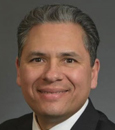
Mark Meek is a Democratic state senator from Oregon Senate District 20 who took office in January 2023, previously served in the Oregon House, and is seeking re-election on November 3, 2026.[1]A small business owner and Air Force veteran, he chaired the Senate Finance and Revenue Committee in the 2023-2024 session.[1]
Mark Meek served in the U.S. Air Force from 1983 to 1990 and earned a bachelor's degree from Park University in 1997.[1]His career experience includes working as a small business owner.[1]In a Ballotpedia survey, his campaign described him as the first in his family to graduate high school, and said he lives in Gladstone with his wife.[2]
Meek represented Oregon House District 40 from 2017 to 2023, succeeding Brent Barton.[1]He then won the Senate seat previously held by Bill Kennemer and assumed office on January 9, 2023.[1]In the 2023-2024 session, Meek chaired the Finance and Revenue Committee and was co-chair of the Joint Tax Expenditures Committee.[1]
Their recorded votes on bills that divided the chamber (unanimous votes left out), grouped by topic. A bill can sit under more than one topic. "With" and "against" compare each vote with how most Democrats voted. How topics are assigned
›Jobs & cost of living235 with · 11 against246 votes
<b>Digest: The Act approves agency fees. (Flesch Readability Score: 66.4).</b> [<i>Digest: The Act creates an agency budget. (Flesch Readability Score: 73.8).</i>] [<i>Appropriates moneys from the General Fund to _____ for biennial expenses.</i>] [<i>Limits biennial expenditures from fees, moneys or other revenues, including Miscellaneous Receipts, but excluding lottery funds and federal funds, collected or received by _______.</i>] [<i>Limits biennial expenditures from federal funds.</i>] <b>Approves certain fees adopted by the Department of Consumer and Business Services.</b> Declares an…
Digest: The Act makes laws about unpaid wages for workers who work on construction projects. (Flesch Readability Score: 65.7). Makes an owner and a direct contractor jointly and severally liable in a civil action for any unpaid wages owed to the unrepresented employees of the direct contractor and subcontractors at any tier. Provides the statute of limitations for actions regarding recovery for unpaid wages.
Digest: This Act makes rules about how Medicare supplement policies work and when they can be offered. (Flesch Readability Score: 63.6). Prohibits the increased cost or denial of a Medicare supplement insurance policy due to a preexisting condition and establishes open enrollment standards for Medicare supplement policies.
Digest: This Act makes rules about how Medicare supplement policies work and when they can be offered. (Flesch Readability Score: 63.6). Prohibits the increased cost or denial of a Medicare supplement insurance policy due to a preexisting condition and establishes open enrollment standards for Medicare supplement policies.
Digest: Stops people in charge of companies that do not do medical work from running both the company and another entity that does medical work. Stops companies from telling their workers that they cannot work for someone else, say that the company is bad or speak out about bad acts. Stops companies from punishing those who speak out. (Flesch Readability Score: 61.3).
<b>Digest: The Act tells drug makers not to take actions that make it hard for a drug store to get certain drugs for health care providers, deliver the drugs to the providers, or dispense the drugs. Makes it a civil penalty to violate the Act. (Flesch Readability Score: 71.0).</b> [<i>Digest: The Act tells drug makers not to take actions that make it hard for a drug store to get certain drugs for health care providers, deliver the drugs to the providers or dispense the drugs.
Digest: The Act makes betting on dog races illegal. (Flesch Readability Score: 82.3). Prohibits wagering on dog races. Modifies animal racing law to remove references to greyhound racing. <b>Becomes operative July 1, 2027.</b>
Digest: The Act requires the Governor to appoint a U.S. Senator when a vacancy happens in the office. The Act states when the appointment ends and when a special election must occur. (Flesch Readability Score: 62.8). Requires the Governor to appoint a United States Senator when a vacancy in the office occurs.
Apr 28, 2025 · Passed 16–13 · against most DemocratsOfficial record ↗
<b>Digest: The Act creates two new rapid fire activator crimes and changes the public buildings where a person with a CHL can possess a gun. The Act also changes when Ballot Measure 114 applies. The Act takes effect on the 91st day after sine die. (Flesch Readability Score: 70.8).</b> [<i>Digest: The Act creates two new rapid fire activator crimes and changes the public buildings where a person with a CHL can possess a gun. The Act takes effect on the 91st day after sine die.
Digest: The Act increases fees related to wells. The Act takes effect when the Governor signs it. (Flesch Readability Score: 77.1). Increases certain fees related to wells. Declares an emergency, effective on passage.
Digest: This Act makes changes to laws about areas with ground water quality problems. (Flesch Readability Score: 63.4). Modifies provisions of law related to declarations of ground water quality concern areas and ground water quality management areas. Directs the Governor to appoint an agency to lead an interagency team in ground water quality concern areas and ground water quality management areas.
<b>Digest: This Act tells the EQC to make landfills in Benton County test and fix methane gas leaks. (Flesch Readability Score: 85.0).</b> [<i>Digest: This Act tells the EQC to make landfills test and fix methane gas leaks. (Flesch Readability Score: 95.9).</i>] Requires the owner or operator of a municipal solid waste landfill <b>located in Benton County</b> to conduct surface emissions monitoring and report data as specified in the Act. Takes effect on the 91st day following adjournment sine die.
<b>Digest: Tells ODE to do an audit of the tests given to kindergarteners. (Flesch Readability Score: 67.7).</b> [<i>Digest: Directs ODE to study the state of education in this state. (Flesch Readability Score: 72.6).</i>] Requires the Department of Education to [<i>study the adequacy of public education in this state for kindergarten through grade 12</i>]<b> conduct an audit of assessments administered to kindergarteners in public schools</b>. Directs the department to submit findings to the interim committees of the Legislative Assembly related to education not later than September 15, 2026.
Digest: The Act creates an agency budget. (Flesch Readability Score: 73.8). Appropriates moneys from the General Fund to the Teacher Standards and Practices Commission for biennial expenses. Limits biennial expenditures from fees, moneys or other revenues, including Miscellaneous Receipts, but excluding lottery funds and federal funds, collected or received by the commission. Declares an emergency, effective July 1, 2025.
Digest: The Act says a syringe service program may not operate by a school or child care facility. (Flesch Readability Score: 65.1). Prohibits a syringe service program from operating a mobile or temporary location within 2,000 feet of a school or licensed child care facility. Defines "syringe service program." Provides that any person may bring a cause of action for damages against a syringe service program operating in violation of the prohibition.
Digest: Tells two state agencies to set rules for making housing easier to access and use for people with disabilities. Takes effect 91 days after the session ends. (Flesch Readability Score: 61.5). Requires the Director of the Department of Consumer and Business Services to adopt rules to conform the state building code to accessibility requirements under the Fair Housing Act and to certain American National Standards Institute standards for housing accessibility.
Digest: This Act requires the OHCS to create a statewide shelter program. (Flesch Readability Score: 72.6). Requires the Housing and Community Services Department to establish a statewide shelter program through which regional coordinators are selected to administer funding to shelter providers.<b> Sunsets January 2, 2034.</b> Requires the department to adopt rules on or before January 1, 2026, and to select regional coordinators on or before May 1, 2026. Declares an emergency, effective on passage.
Digest: This Act limits rent increases and sales constraints by a landlord in a home park or marina. (Flesch Readability Score: 70.1). [<i>Reduces</i>]<b> Fixes at six percent </b>maximum rent increases for rental spaces in a <b>larger</b> facility [<i>to match changes to the consumer price index. Limits to 10 percent the maximum increase in rent paid by the purchaser of a dwelling or home in a facility.</i>]<b> beginning in 2026.
Jun 12, 2025 · Passed 17–10 · against most DemocratsOfficial record ↗
<b>Digest: The Act says that a public body may not give certain data to a data broker unless the data broker says that it will not be used to enforce immigration law. The Act provides certain exceptions. (Flesch Readability Score: 64.0).</b> [<i>Digest: The Act says that a public body may not give certain data to a data broker unless the data broker says that it will not be used to enforce immigration law. A public body can also give out data under public records law or a court order.
<b>Digest: Requires a covered platform to have an agreement in order to access the online content of a news provider. Creates a group for civic information to give grants. (Flesch Readability Score: 62.7).</b> [<i>Digest: Makes online platforms pay online news providers and a group for civic information. Creates a group for civic information to give grants. (Flesch Readability Score: 61.0).</i>] [<i>Requires online platforms to pay moneys to digital journalism providers and the Oregon Civic Information Consortium.
Jun 24, 2025 · Failed 14–15 · against most DemocratsOfficial record ↗
Digest: Says that a person may not make a sales call by voice or text unless the person follows certain rules. (Flesch Readability Score: 80.7). Prohibits as an unlawful practice under the Unlawful Trade Practices Act a person's initiating a telephone solicitation outside specified hours or more than three separate times within a 24-hour period[<i>,</i>]<b> or</b> misrepresenting or falsifying the person's identity[<i>,</i>]<b> or</b> the purpose of the call [<i>or the location from which the person is calling or failing to make required disclosures or inquiries during the call</i>].
<b>Digest: The Act tells ODOT to team up with the State of Washington and Vancouver, B.C., to make plans for rail. Adds more to passenger rail plan. Expands biennial report on rail. (Flesch Readability Score: 78.9).</b> [<i>Digest: The Act tells ODOT to team up with the State of Washington and Vancouver, B.C., to make plans for rail. The Act tells ODOT to report every two years to the JCT. (Flesch Readability Score: 79.5).</i>] <b>Expands requirements for the passenger rail plan.
Digest: The Act says the vote on the transportation ballot measure will be in May. (Flesch Readability Score: 77.8). Moves the election date for the parts of chapter 1, Oregon Laws 2025 (special session), referred to the people by Referendum Petition 2026-302, to the primary election held on May 19, 2026. Sets the procedure for the statewide special election on Referendum Petition 2026-302. Declares an emergency, effective on passage.
Feb 23, 2026 · Passed 17–13 · against most DemocratsOfficial record ↗
Digest: The Act creates an agency budget. (Flesch Readability Score: 73.8). Appropriates moneys from the General Fund to the Department of Transportation for certain biennial expenses. Limits certain biennial expenditures from fees, moneys or other revenues, including Miscellaneous Receipts and certain federal funds, but excluding lottery funds and other federal funds, collected or received by the department. Limits certain biennial expenditures by the department from other federal funds. Limits certain biennial expenditures by the department from lottery moneys.
Jun 25, 2025 · Passed 16–12 · against most DemocratsOfficial record ↗
<b>Digest: Changes the term "militia" in the state statutes to "National Guard." (Flesch Readability Score: 64.9).</b> [<i>Digest: Changes the term "militia" in the state statutes to "national guard." (Flesch Readability Score: 64.9).</i>] Modifies terminology by changing statutory references to "militia" to [<i>"national guard."</i>]<b> "National Guard."</b> <b>Removes "unorganized militia."</b>
Digest: The Act lets deployed people get married even if they cannot be there in person if certain criteria are met. (Flesch Readability Score: 60.6). Modifies provisions regarding solemnization of marriage to permit deployed service members to be married remotely. .
<b>Digest: The Act would have Business Oregon give grants to small businesses for costs that are due to tariffs. The Act would have the agency work with other state and local bodies to update the state's unified trade strategy. (Flesch Readability Score: 60.6).</b> [<i>Digest: The Act would have Business Oregon give grants to small businesses for costs due to federal tariffs. The Act would have Business Oregon work with other state and local bodies to update the state's unified trade strategy. The Act would have DAS make a procurement reform roadmap by December 15 of this year.
Voted against most of their party on 23 of 257 party-divided votes on file.
Most often on: Jobs & cost of living (8), Rights & public safety (6), Climate & energy (4)
Increases the state transient lodging tax.
What it does: Digest: The Act increases a tax on short-term lodging. The Act changes the name of a subaccount related to wildlife. The Act lists how moneys from the tax increase must be distributed. (Flesch Readability Score: 70.8)…
Voted no · most Democrats voted yes · Democrats 17–1, Republicans 3–8
Exempts an energy facility from needing a site certificate from the Energy Facility Siting Council if the energy facility produces power from a renewable energy source, qualifies for certain federal renewable energy tax credits and is placed in service on or before December 31, 2030, or a date allowed by exception and a local land use application for the facility is submitted on or before December 31, 2028.
What it does: Digest: Creates an exception to needing a site certificate from EFSC. (Flesch Readability Score: 61.3). Exempts an energy facility from needing a site certificate from the Energy Facility Siting Council if the energy…
Voted no · most Democrats voted yes · Democrats 17–1, Republicans 3–7
Provides that an operator may require a participant in a sport, fitness or recreational activity to release the operator for claims for ordinary negligence under certain circumstances.
What it does: <b>Digest: The Act says that an operator can make a person doing sports, fitness or recreation waive some claims for negligence. The Act says that some types of claims may not be waived. The Act says that whether a ri…
Voted no · most Democrats voted yes · Democrats 14–4, Republicans 2–9
Expands drug manufacturer annual reporting requirements to include all patient assistance programs offered or funded by the manufacturer that provided assistance to consumers in this state in the previous calendar year.
What it does: <b>Digest: This Act expands what a drug manufacturer must report on each year. Starts on 1/1/2028. (Flesch Readability Score: 63.8).</b> [<i>Digest: The Act tells OHA to study health care. (Flesch Readability Score: 9…
Voted no · most Democrats voted yes · Democrats 17–1, Republicans 0–9
Requires an electric utility to disclose to its customers the costs of storing nuclear waste produced by an energy facility in generating electricity.
What it does: <b>Digest: Makes a power provider tell the public the costs to store nuclear waste made from making electric power. (Flesch Readability Score: 61.6).</b> [<i>Digest: Makes a power provider disclose the costs to store…
Voted no · most Democrats voted yes · Democrats 17–1, Republicans 0–11
Substantive votes concern legislation or nominations; procedural votes concern how the chamber considers them. A Yes vote applies to the motion shown, which may not be final passage.
HB 4016 · OR SENATE
Requires public contractors to demonstrate and maintain tax compliance, through a certification process, as a condition of the execution of a public contract.
YesVOTED
Motion: Third reading. Carried by Frederick. Passed.
Digest: Says that people who get public contracts must obey tax laws and must show proof of compliance with tax laws. (Flesch Readability Score: 76.8). Requires public contractors to demonstrate and maintain tax compliance, through a certification process, as a condition of the execution of a public contract. Becomes operative January 1, 2027. Directs the Secretary of State to study methods for collecting information through business registry function to ensure tax compliance by persons doing business in this state. Takes effect on the 91st day following adjournment sine die.
Establishes the Housing Opportunity, Longevity and Durability Fund to deposit Article XI-Q bonds to be used by the Housing and Community Services Department to preserve affordable housing at risk of loss.
YesVOTED
Motion: Third reading. Carried by Pham. Passed.
Digest: This Act sets up a bond fund to preserve low-cost housing and requires OHCS to report on low-cost housing barriers. (Flesch Readability Score: 63.8). Establishes the Housing Opportunity, Longevity and Durability Fund to deposit Article XI-Q bonds to be used by the Housing and Community Services Department to preserve affordable housing at risk of loss.
Authorizes the State Treasurer to issue Article XI-Q general obligation bonds to finance renovation or expansion of courthouses.
YesVOTED
Motion: Third reading. Carried by Smith DB. Passed.
<b>Digest: The Act lets the State Treasurer issue bonds to pay to expand or renovate courthouses. The Act also changes who has to notify the court, and when, if a defendant found unfit to proceed is not complying with CRS. (Flesch Readability Score: 65.5).</b> [<i>Digest: The Act lets the State Treasurer issue bonds to pay to expand or renovate courthouses. (Flesch Readability Score: 61.8).</i>] Authorizes the State Treasurer to issue Article XI-Q general obligation bonds to finance renovation or expansion of courthouses.
Directs the Oregon Business Development Department to set up a program for micro-enterprise tariff adjustment grants to small businesses for costs increased by federal tariffs.
YesVOTED
Motion: Third reading. Carried by McLane. Passed.
<b>Digest: The Act would have Business Oregon give grants to small businesses for costs that are due to tariffs. The Act would have the agency work with other state and local bodies to update the state's unified trade strategy. (Flesch Readability Score: 60.6).</b> [<i>Digest: The Act would have Business Oregon give grants to small businesses for costs due to federal tariffs. The Act would have Business Oregon work with other state and local bodies to update the state's unified trade strategy. The Act would have DAS make a procurement reform roadmap by December 15 of this year.
Requires the State Treasurer to use up to $44 million from the Unclaimed Property and Estates Fund to guarantee a loan made to a rural hospital for financial stabilization.
YesVOTED
Motion: Rules suspended. Third reading. Carried by Smith DB. Passed.
<b>Digest: This Act makes the State Treasurer use unclaimed moneys to guarantee a loan to a hospital. (Flesch Readability Score: 63.6).</b> [<i>Digest: This Act lets the State Treasurer loan unclaimed moneys to rural hospitals. (Flesch Readability Score: 60.7).</i>] [<i>Authorizes</i>]<b> Requires</b> the State Treasurer to [<i>loan</i>]<b> use</b> up to [<i>20 percent of</i>] <b>$44 million from </b>the Unclaimed Property and Estates Fund to <b>guarantee a loan made to a</b> rural [<i>hospitals</i>]<b> hospital</b> for financial stabilization. Declares an emergency, effective on passage.
<b>Digest: The Act would set up a Joint Permitting Council to run a fast track permit program. The Act would direct certain state agencies to publish a list of certain permits that can be issued by the agencies. The Act would adjust certain requirements of the enterprise zone program and restrict the use of the program for data centers. The Act would adjust the tax credit for a taxpayer that creates new jobs.
Directs the Oregon Business Development Department to develop a roadmap for the purpose of promoting industrial symbiosis activities in Oregon.
YesVOTED
Motion: Third reading. Carried by Sollman. Passed.
<b>Digest: The Act would have Business Oregon make a plan to boost industrial symbiosis, which means the use of the resources of one firm by a second firm. The Act would set up four pilots that would get tech help from the agency for symbiosis projects. The Act would let certain county service districts fund their facilities with the charges they collect. (Flesch Readability Score: 62.7).</b> [<i>Digest: The Act would have Business Oregon make a plan to boost industrial symbiosis, which means the use of the resources of one firm by a second firm.
Requires owners or operators of bulk oils or liquid fuels terminals to obtain a certificate of financial responsibility from the Department of Environmental Quality.
YesVOTED
Motion: Rules suspended. Third reading. Carried by Frederick. Passed.
Digest: This Act makes owners of bulk oils and liquid fuels terminals show they can cover the costs of oil or fuel spills. (Flesch Readability Score: 80.6). Requires owners or operators of bulk oils or liquid fuels terminals to obtain a certificate of financial responsibility from the Department of Environmental Quality. Directs the Environmental Quality Commission to establish rules pertaining to certificates of financial responsibility. Requires the department to report to the Legislative Assembly on the implementation of the Act each even-numbered year.
Creates authority to coordinate emergency management.
YesVOTED
Motion: Rules suspended. Third reading. Carried by Manning Jr. Passed.
Digest: The Act creates new systems and structures and changes law to improve emergency response in the state. (Flesch Readability Score: 65.1). Creates [<i>statewide emergency preparedness offices and authorities</i>] <b>authority</b> to coordinate emergency management. [<i>Authorizes bonding for public safety projects.</i>] Requires state agencies to designate liaisons for emergency management. Imposes duties on the Oregon Department of Emergency Management related to management of emergency preparedness assets.
Requires the Oregon Health Authority to adopt a payment mechanism to pay certain nonprofit reproductive health care providers that are not eligible to receive federal Medicaid funds for services provided to medical assistance recipients.
YesVOTED
Motion: Third reading. Carried by Patterson. Passed.
Digest: The Act allows OHA to pay health care providers that may not receive federal Medicaid funds. The Act requires OHA to pay providers using only state funds. (Flesch Readability Score: 62.7). Requires the Oregon Health Authority to adopt a payment mechanism to pay certain nonprofit reproductive health care providers that are not eligible to receive federal Medicaid funds for services provided to medical assistance recipients.